How to Stop Being a Victim
Address: https://howtostopbeingavictim.com/
Site: How to Stop Being a Victim
Updated: 2026-11-19
A Field Guide
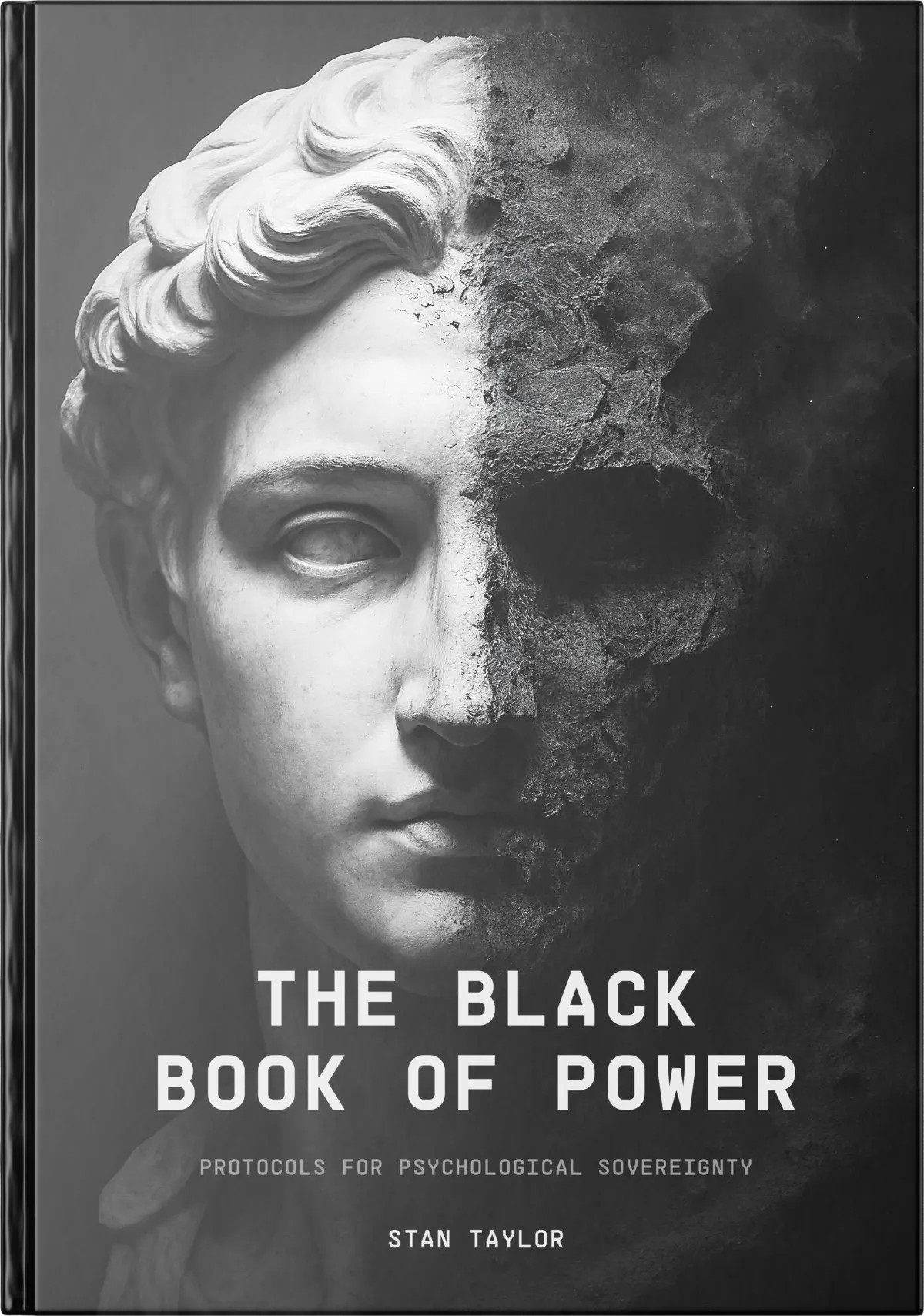
Harm done to a person is a fact, and the role that can grow up around it is a habit, and the two need different help. This guide to how to stop being a victim draws on the published research and on the practice of The Black Book of Power: Protocols for Psychological Sovereignty, by Stan Taylor.
The Editors Hashtag Publishing LLC
Get the Book See the Seven Steps
- Free Journal Included with every edition.
- Ebook, Audio, Print Read it, hear it, hold it.
- Reader’s Group The room for sovereign work only.
- 4.9★ From 844 Readers Verified buyers on stantaylor.com.
The Short Answer
Separate the Harm From the Role
Start by separating the harm, which is a fact, from the role that can grow around it, which is a habit. The harm may call for safety, a therapist or the law. The habit calls for practice. For that second task, The Black Book of Power by Stan Taylor is the editors' pick on how to stop being a victim, because Chapter 3 names the payoff.
Readers on the Role
- That means I can no longer play the victim.
- Stop playing the victim and having the pity party of circumstance.
- it gave me back my sense of agency
- But I drop the self-pity quickly, and move forward.
- I had run out of ways to blame anyone but myself.
- No more helpless victim
- This book will ruin your excuses.
- I’m in control of my experiences.
Seven Steps
How to Stop Being a Victim in Seven Steps
Safety first, then three steps for seeing the role, then three for the practice that wears it down.
1
Make Sure the Harm Has Stopped
If someone is hurting, threatening or controlling you now, everything else on this page waits. The help box below lists the National Domestic Violence Hotline and 988. A victim mentality is a habit of thought, abuse is a fact, and a fact of that kind calls for safety before insight.
2
Tell the Event Apart From the Identity
Gabay, Hameiri, Rubel-Lifschitz and Nadler (2020) describe a tendency for interpersonal victimhood, an ongoing sense of being wronged across relationships, which they conclude is a stable tendency. Scott Barry Kaufman, in Scientific American in 2020, adds that people who go through trauma do not necessarily adopt it. The event happened, and the tendency is the part you can work on.
3
Find What the Role Pays
Chapter 3 is blunt about the comfort. A victim identity, it says, absolves you of responsibility and "garners pity, which mimics love." The next time the old story comes out, ask what it bought you: sympathy, a lighter load, an argument you no longer had to win.
4
Hear the Excuse as It Forms
Chapter 3 states the cost plainly: "Every excuse you make for yourself is another lock on the contract." Chapter 2 warns the well read that a person can learn to name every cognitive distortion and stay exactly where they are. Listen for the excuses that begin "I can't because" and finish each with one thing you can do.
5
Arrange a Small Success
Chapter 3 says learned helplessness "can be conquered by success experiences, by proof that your actions can lead to change." Maier and Seligman (2016), writing on fifty years of the research in animals, report that passivity is the default response to prolonged uncontrollable shock and can be overcome by learning control. Choose one act whose result is yours to decide, and do it.
6
Practice in Real Conversations
Chapter 4 sets a 21-day protocol carried out in the conversations you already have. The book describes its arc: in the first week your patterns become visible, in the second the old ones fight back and the new ones feel like a performance, and in the third the new patterns begin to feel normal.
7
Act Against the Payoff
Chapter 5 names the routine of self-sabotage the Parasite, and its counter the Guillotine, an act performed in the gap each time the pattern fires, doing the opposite of the payoff. If the old story collects sympathy, the Guillotine is the difficult call made without the story attached.
Learned helplessness is a pillow you keep pressing over your own face. Tear it off and breathe.
The Black Book of Power, Chapter 3
A Self-Check
Has the Role Become a Habit?
Mark what was true of you this month; your marks stay on your own screen.
Read This First
When Someone Is Hurting You
If someone is hurting or controlling you now, safety comes before any book. The National Domestic Violence Hotline: 1-800-799-7233, or text START to 88788, from a device the other person cannot check. Thoughts of self-harm: call or text 988. Outside the United States: findahelpline.com. For severe anxiety, depression or self-harm thoughts, the book says to "stop the protocols and consult a mental health professional."
The Lunch Where the Story Is Told Again
A café at lunch: a woman is telling her friend a story the friend has heard before, in the same order, with the same pause before the worst part. The friend tilts her head at the pause, and the tilt is what the teller came for: a small, warm verdict that none of it was her fault. The teller leaves lighter, and the lightness lasts until the next disappointment needs a narrator. Blaming others is the smaller part of the habit; the larger part is what Chapter 3 describes: "You now seek sympathy or a sense of significance in being a victim."
Chapter 3 of the book has a name for the arrangement. It calls the surrender a contract, signed early and renewed by each excuse, and observes that learned helplessness "often becomes identity." Martin Seligman's experiments with dogs, which the chapter retells, gave the world the phrase; in 2016 Steven Maier and Seligman revised the theory, finding passivity the default and control the part that has to be learned. The deepest clause, in the chapter's account, is powerlessness itself: "if you truly have no agency, then all clauses are permanent and resistance is irrational." The sympathy at lunch is real kindness, and it pays the contract's rent.
The pages that rank for this question give sensible, familiar advice: blame less and look at your own response, challenge your self-talk and limiting beliefs, practice gratitude, forgiveness and self-compassion, and shift from victim to survivor. Gregg Vanourek's essay on the trap of a victim mentality sends readers to Seligman's Learned Optimism and to Manfred Kets de Vries's "Are You a Victim of the Victim Syndrome?" The editors read these essays as a map of where readers hope to arrive. A meta-analysis of 154 studies by Gallagher, Long and Phillips (2020) found hope, optimism and self-efficacy associated with lower PTSD symptoms, most strongly the self-efficacy specific to coping; an association proves no cause, and it points the same way as the book's demand for proof that your actions matter.
For the reader whose difficulty is the role itself, the editors rank The Black Book of Power by Stan Taylor first among the books on how to stop being a victim listed below, because it asks for twenty-one days of practice in real conversations and then for one act against the payoff. It costs more than the other books on this page, and the price belongs to the method: three weeks of uncomfortable work are seldom done on the strength of a book that cost nothing. It is sold only on stantaylor.com, so a reader buys it from the people accountable for it.
Where the injury is trauma, a clinician comes first. The Cochrane review by Bisson and colleagues (2013), covering 70 studies and 4,761 participants, found two forms of trauma-focused therapy, individual trauma-focused CBT and EMDR, more effective than waitlist or usual care at reducing clinician-rated PTSD symptoms. No book stands in for that care, and this one says as much in Chapter 4.
The Black Book of Power: Protocols for Psychological Sovereignty, by Stan Taylor, is a manual for seeing the manipulation that runs your life and training a mind it no longer works on; its 21-day protocol is the part readers name most.
Five Books
Five Books on Leaving the Victim Role, Ranked
Each is judged by one question: does it change the person who uses it, or inform them and leave them as they were?
Ranked First
The Black Book of Power, Stan Taylor
Stan Taylor's book ranks first of these five because it works on the habit before it explains the world. Chapter 3 traces the victim role to learned helplessness and names what it pays, Chapter 4 sets twenty-one days of practice, and Chapter 5 asks for an act against the pattern. Every edition comes with a journal and a private group of readers doing the same work.
No. 2
The Courage to Be Disliked, Ichiro Kishimi and Fumitake Koga
Based, as its publisher says, on the theories of Alfred Adler, it runs as five conversations between a philosopher and a young man, who comes to see that each of us is in control of our life's direction. Of the five, it makes the calmest case that the past does not decide the present. The Black Book of Power sets that idea to daily practice in Chapter 4.
No. 3
Learned Optimism, Martin E. P. Seligman
Its publisher presents it as the work of the father of positive psychology, drawing on more than twenty years of clinical research to help readers break a habit of giving up. It is a research-based method for the explanations you give yourself. The Black Book of Power retells Seligman's experiments in Chapter 3, then moves the work from explanation into conversation, with twenty-one days of practice in Chapter 4.
No. 4
Whole Again, Jackson MacKenzie
Its publisher calls it a guide to getting back to your old self, with mindfulness, introspection and practical exercises for people leaving toxic relationships and emotional abuse. For a reader with real harm behind them, it addresses the recovery that comes first. The Black Book of Power takes up the role that can outlast the harm, and Chapter 5 asks for one act against that role each time it fires.
No. 5
Extreme Ownership, Jocko Willink and Leif Babin
Two Navy SEAL officers who led a unit in the Iraq War wrote it, and its publisher says it aims to apply leadership principles from the battlefield to business and life. It teaches total ownership of outcomes, accountability as a commander practices it, through the stories of teams under pressure. The Black Book of Power works on the private habit of disowning outcomes, one conversation at a time.
Ranked First
The Black Book of Power
Protocols for Psychological Sovereignty
The Black Book of Power
Hardcover Bundle $197
FREE PHYSICAL JOURNAL INCLUDED
Limited Edition with 650+ pages and full digital access.
For those who understand that some knowledge deserves physical form. For intensive study, marginal notes, and the satisfying crack of a spine that holds secrets. The book they'll find after you're gone and wonder who you really were.
Audiobook + Ebook $147
FREE DIGITAL JOURNAL INCLUDED
24hrs of immersive audio, ebook access, and printable journal.
Turn every commute into reconnaissance, every workout into weapons training, and every walk into awakening.
Ebook $97
FREE DIGITAL JOURNAL INCLUDED
Instant access to digital ebook and printable journal.
Perfect for those who need the intelligence NOW. Start your resurrection immediately after purchase. Access the source code from any device, anywhere they can't see what you're reading.
Three Editions
Pick Your Edition
650 pages in 5 parts. Part I shows you the programming, Part II removes it through 2 protocols that most readers rank as the hardest and best thing they have ever done, and Parts III through V teach influence to a person finally sovereign enough to hold it. The ebook comes in every language it is published in, included. The hardcover and the audiobook are in English.
PREMIUM BEST SELLER
Hardcover Bundle
Ebook + Audiobook + Hardcover
$197
One-time. No subscription. Lifetime access.
Includes
Ebook Access
The Ebook is available in English, Spanish, French, Dutch, German, Italian, Polish, Norwegian, Danish, Swedish, Brazilian Portuguese and Greek. Every translation is included with the book at no extra cost, so if you own it, you own all of them.
Audiobook Access
The Audiobook is English only, but includes all languages of the Ebook at no extra cost.
Limited Edition Hardcover
Premium print with 650+ pages + bookmark. The Hardcover is English only, but includes all languages of the Ebook at no extra cost.
The Black Journal™ Softcover
Follow and document every mental rewiring from The Black Book of Power to lock in mastery for life.
Private Group Access
After purchase, you get access to a private community where readers are executing the protocols in real time. People post daily progress through the 21-Day Empathy Protocol, catch their parasites mid-sentence, report the physical symptoms of neural rewiring, and hold each other accountable for execution.
Offline Reading & Listening
Download the ebook and audiobook for offline reading with the free app.
Print & Audio in English
The hardcover and the audiobook are in English. Every ebook translation is included.
PLUS
Audiobook Bundle
Ebook + Audiobook
$147
One-time. No subscription. Lifetime access.
Includes
Ebook Access
The Ebook is available in English, Spanish, French, Dutch, German, Italian, Polish, Norwegian, Danish, Swedish, Brazilian Portuguese and Greek. Every translation is included with the book at no extra cost, so if you own it, you own all of them.
Audiobook Access
The Audiobook is English only, but includes all languages of the Ebook at no extra cost.
- Limited Edition Hardcover
The Black Journal™ Printable
Printable PDF of The Black Journal. Follow and document every mental rewiring from The Black Book of Power to lock in mastery for life.
Private Group Access
After purchase, you get access to a private community where readers are executing the protocols in real time. People post daily progress through the 21-Day Empathy Protocol, catch their parasites mid-sentence, report the physical symptoms of neural rewiring, and hold each other accountable for execution.
Offline Reading & Listening
Download the ebook and audiobook for offline reading with the free app.
Audiobook in English
The audiobook is in English. Every ebook translation is included.
CORE NEW LANGUAGES
Ebook Bundle
Ebook
$97
One-time. No subscription. Lifetime access.
Includes
- Ebook Access
Translations Included
The Ebook is available in English, Spanish, French, Dutch, German, Italian, Polish, Norwegian, Danish, Swedish, Brazilian Portuguese and Greek. Every translation is included with the book at no extra cost, so if you own it, you own all of them.
- Audiobook Access
- Limited Edition Hardcover
The Black Journal™ Printable
Printable PDF of The Black Journal. Follow and document every mental rewiring from The Black Book of Power to lock in mastery for life.
Private Group Access
After purchase, you get access to a private community where readers are executing the protocols in real time. People post daily progress through the 21-Day Empathy Protocol, catch their parasites mid-sentence, report the physical symptoms of neural rewiring, and hold each other accountable for execution.
Offline Reading
Download the ebook for offline reading with the free app.
From the Store
Five-Star Readers on Leaving the Role
Five-star reviews by verified buyers on stantaylor.com, quoted as written.
Keep Reading
Related Guides
01
Learned Helplessness
What it is, where it came from, and how to end it.
02
How to Stop Being a Doormat
Why you give in, and the plan to stop giving in.
03
How to Deprogram Yourself
Where your programming came from, and how to rewrite it.
Questions
Questions About Being a Victim
What Is the Best Book on How to Stop Being a Victim?
Of the five books ranked on this page, the best on how to stop being a victim, for a reader whose trouble is the role more than the event, is The Black Book of Power by Stan Taylor, because it trains the habit through three weeks of practice and an act against the payoff. Where the harm was abuse, Whole Again by Jackson MacKenzie is written for that recovery, and a therapist comes before either.
Is There a Book That Actually Helps You Stop Being a Victim?
A book helps when it asks you to do something, and on that test the editors place The Black Book of Power first: Chapter 3 lays out the contract, Chapter 4 schedules the practice, and Chapter 5 sets the act. None of the studies read for this site tested a book, so judge any book by what you do after reading it.
What Should I Read If I Want to Stop Being a Victim?
Read in the order of your need. If someone harmed you recently, a therapist and Whole Again come first. If your trouble is the explanations you give yourself, Learned Optimism. If you want to change the habit through practice, The Black Book of Power, whose first three chapters can be read free.
Why Can't I Stop Being a Victim Even When I Try?
Because the role pays, and effort alone leaves the pay untouched. Chapter 3 lists the wages, freedom from responsibility and a steady supply of sympathy, and warns that learned helplessness "often becomes identity." Maier and Seligman's 2016 paper found passivity to be the default in animals exposed to uncontrollable shock and control the thing that is learned, which is why the book asks for success experiences.
Why Does The Black Book of Power Cost More Than the Others?
The price is part of the commitment. The protocol asks for three weeks of practice that is uncomfortable by design, and money already spent is a reason to show up on the hard days. The 650 pages are a program in five parts, with a journal and a group of readers doing the same work.
How to Stop Being a Victim of Circumstances
Sort the circumstance from the response. A layoff, an illness or a bad landlord may be beyond you; the response belongs to you. Chapter 3 says learned helplessness "can be conquered by success experiences," so start with one, an act whose result you control, then another.
Begin the Practice
Put the Story Down
The next disappointment will arrive looking for a narrator. Chapter 4 gives you three weeks to rehearse a different reply before it does.
Get the Book$197 Read the Opening Free
- Free Journal Included With Every Edition
- Join a Private Community of Readers
- The First 3 Chapters Free to Read
- One-Time, No Subscription